
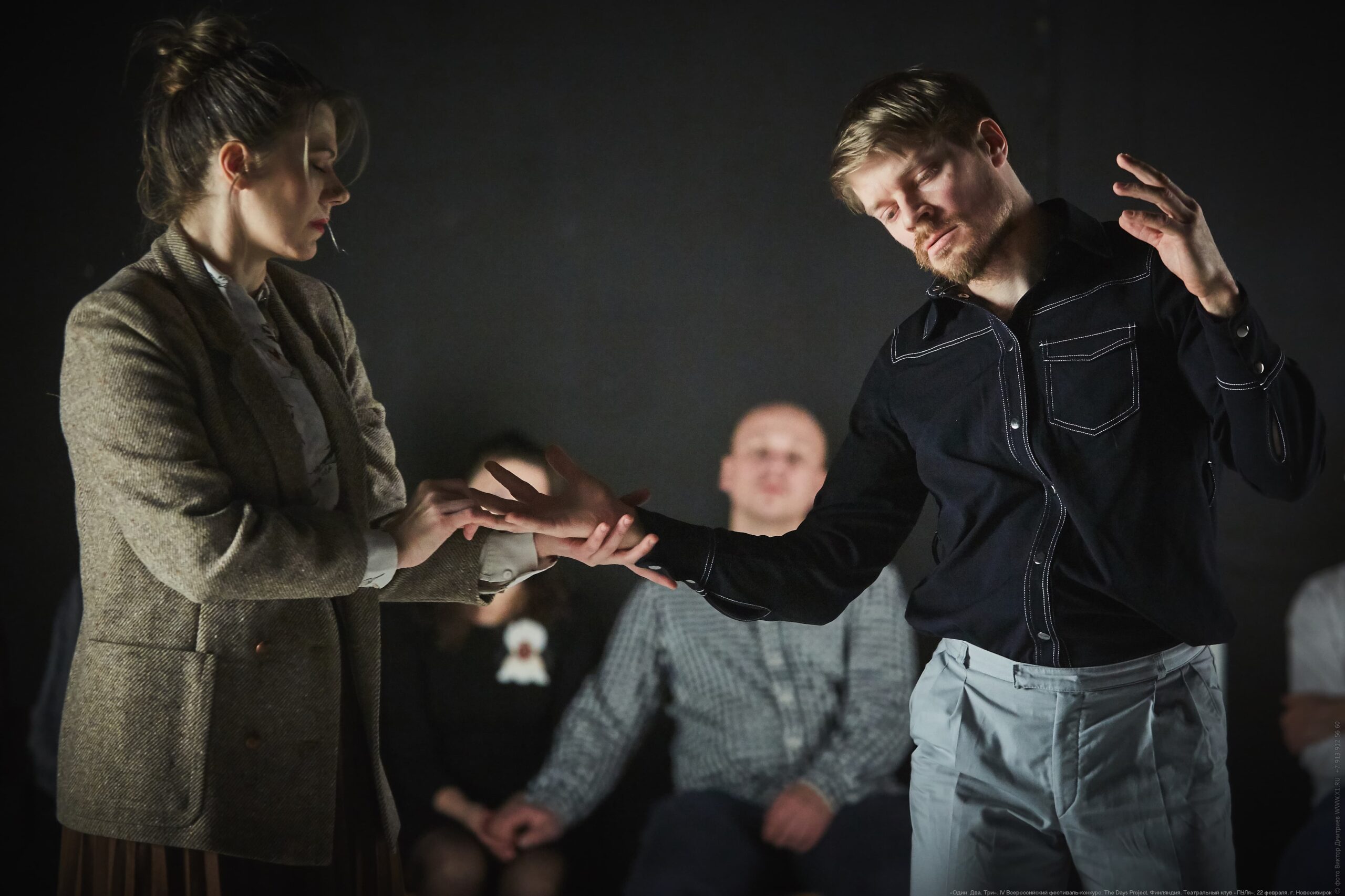
Dancing through The Days
”The work has created a dialogue between all of us, on a meta level, physically and mentally, as well as between the audience and participants, the venues, and the communities.” — Nurmela
Nine years and eleven months ago, Maria Nurmela and Ville Oinonen sat in a café in Stockholm, imagining a project that could offer a dance artist something rare: the chance to develop their own artistic voice, build their career on their own terms, and move forward as a creative force in their own right. Both were tired of the dance field’s structure, where freelance dancers trudge through countless auditions to find work. At that moment, the idea for The Days Project was born.
On a Tuesday in March, we set up a remote connection between Turku, Tampere, and Brussels, and prepare to interview Nurmela and Oinonen. The plan is to discuss the origins and nature of The Days Project, and what it’s like to perform in a piece that invites a new group of participants, aged 55 and up, to share the stage with them.
The Days has been performed around the world for seven years, with nearly 50 guest participants. On 21 March, the performance arrives in Luxembourg at TROIS C-L | Maison pour la danse, the country’s leading contemporary dance organisation.
We have selected a set of questions and are ready to begin. From the very first moments, it becomes clear that The Days is a project of the heart. Dancer, choreographer, teacher, and Feldenkrais (FM) practitioner, Maria Nurmela recounts precisely the moment when it all began. Long-time colleague, dancer, performer, and photographer Ville Oinonen joins in as the project’s early steps are revisited.
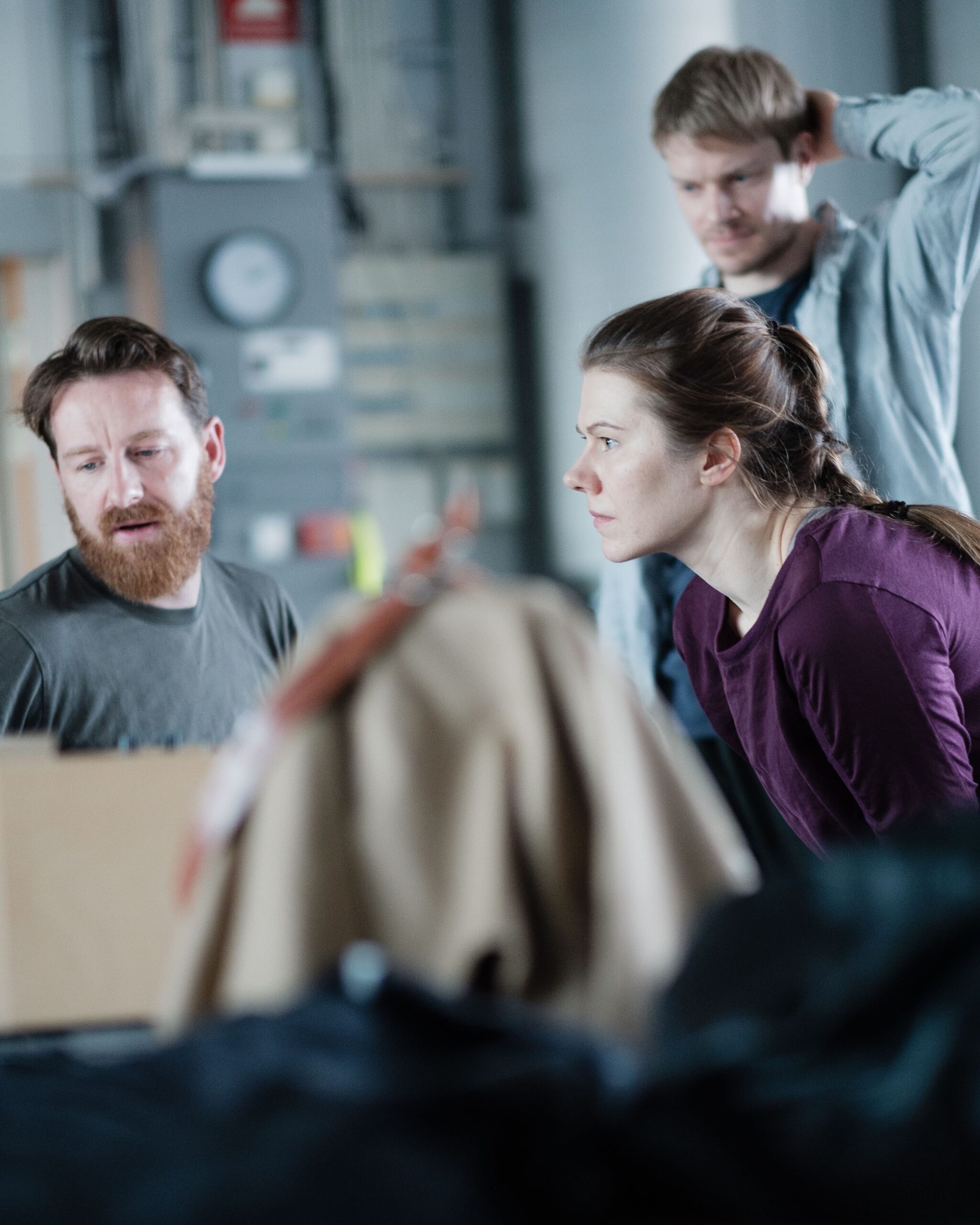
The first steps
The project grew from a dream shared by Nurmela and Oinonen. Their wish was to create a work that would enrich the Finnish dance scene, that could tour internationally, and that could be performed outside of dance houses and city centres. At the same time, the pair wanted to build their professional expertise in performance production and marketing.
In the early stages, individual grants enabled the artists to fully engage in the project, which was developed through personal contacts. It was important to Nurmela and Oinonen that the choreographer chosen be someone both had met in person. The artists reached out to English choreographer Theo Clinkard, with whom Oinonen had met in a workshop in Amsterdam and with whom Nurmela would later meet in London. Clinkard accepted the invitation and joined at his own risk, as there were no guarantees of financial success. Workshops were held in Tampere, and an experimental period began during which the work began to take shape. Created in dialogue, Clinkard proposed a task with Nurmela and Oinonen as co-authors of the piece.
”It is hard from Finland to get somewhere.” — Nurmela
Various connections gave birth to the project: connections between colleagues and practitioners in the field, a familiar curator who praised the work to their colleagues, connections that existed before The Days and were strengthened through it, and the connection the work formed with the audience at its premiere.
The making of The Days Project has received a great deal of support and help from colleagues, and some of the coincidences have felt like pure strokes of luck. For example, the grant application that led to the largest funding before the premiere was submitted from an airport bathroom just 10 minutes before the deadline, and Clinkard’s contacts helped in securing residencies.
Enormous help came from Mikko Lampinen, then director of the Tanssikuu festival, who suggested the work premiere at the Tanssikuu festival in Pori in 2018; producer Inari Pesonen, who helped bring the artistically complete package to the stage for its premiere; and Topi Lehtipuu, then director of the Helsinki Festival, who had heard about the project and invited The Days to participate at the Performing HEL showcase. This offered Nurmela, Oinonen and Clinkard both a performance opportunity and a place to discuss the work with international buyers and create strong connections, such as the Finnish Institute in the UK and Ireland. The showcase was filmed by Olivia Hansson, who created a trailer from what was then 15 minutes of material, a tool that has since proven especially important in selling the work for touring.
After the premiere, the performance began to generate buzz. People wrote about it on Facebook, and within four days The Days had received four invitations from four different theatres to apply for a touring grant from Tanssin Talo. This type of grant application was a one-time opportunity, and The Days received it.
”Gigs just started to happen and it felt like now we are just holding the reins.” — Nurmela
The Days is Nurmela and Oinonen. They are not a company with a structure and team to assist with marketing or tour planning. Oinonen describes this as a double-edged sword, it looks impressive, but in fact they do not have the machinery of a larger organisation behind them. Oinonen wonders whether they would have even more bookings if it were a company with greater resources. The work has been carried by an embrace of love since its earliest days. Things have unfolded naturally with effort, yes, but with a certain momentum.
Inviting and connecting
“The more we perform this piece, the more it becomes ours. We interpret this same game and make our choices every night a-new.” — Nurmela
We steer the conversation toward the work’s movement material. What emerged from that peculiar method Clinkard proposed? Oinonen and Nurmela explain that there are no pre-agreed steps. The structure of the work rests on a certain set of rules that Nurmela and Oinonen use in creating and performing movement. Clinkard has slightly adjusted the tone of the piece by modifying some movements, but otherwise the structure has remained much the same over the years: unchanged, and yet an ever-changing organic work in which the energy and presence of the performers and guest participants influence the whole.
The idea of inviting participants, those older than Nurmela and Oinonen, arose from thinking about how the work should end. The first thought was to invite Nurmela’s mother onto the stage. She declined, so Nurmela, Oinonen and Clinkard decided to invite three familiar, enthusiastic dance-lovers of around 60 to the premiere. This became the catalyst for the participatory work and workshops, since as a touring piece, The Days needed guest participants for every performance.
Nurmela and Oinonen describe the workshops as open to everyone, regardless of physical ability or, for example, memory. Their intention is not to teach participants specific movements, but to invite them to dance using their own potential, guided by certain principles. Nurmela highlights that this kind of work has prompted broader reflection on what dance and dance pedagogy mean in our society.
“The audience has often said that it’s been so nice to see people that are in their age group, that they can relate to.” — Oinonen
The timing and location of workshops vary according to practical realities such as schedules and financial circumstances. Most often Nurmela and Oinonen lead the workshops, though Clinkard has also led some. Participants are often members of 55+ groups belonging to local venues and partners, or, if no existing group is available, participants are gathered specifically for the workshop. Following The Days workshops, some of the groups have continued to exist, as in the Åland Islands and in Canada, where a local teacher continued leading a senior group.
”It’s not about what movements or skills are learned, but about dancing from one’s own starting point, through one’s own body language.” — Oinonen
Oinonen and Nurmela describe working with participants as instructive and touching. There is a certain directness and honesty in the participants’ presence. The way they are is genuinely what they are. Each participant is unique and gives cues as to how Nurmela and Oinonen guide them — what kind of support they need and how to move forward in the project. The task of Oinonen and Nurmela is to remain open to what comes and to enable it, guiding gently.
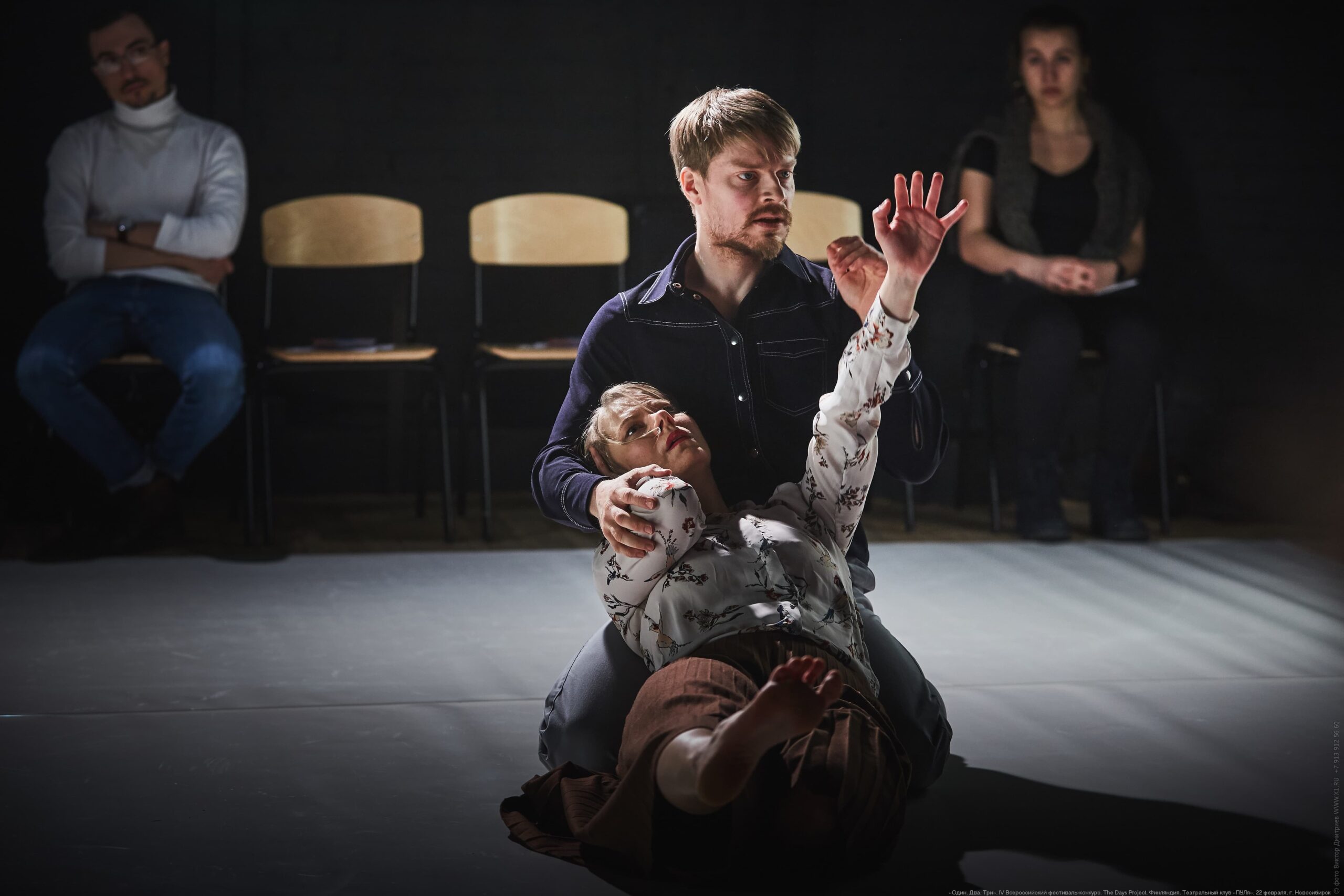
Freedom to be present and experience
Oinonen and Nurmela know that the work is good. They do not wish to boast, but they are proud of what they have made. They recognise the significance of the piece and the way it can continue to live from year to year. The work has grown alongside its makers. Nurmela reflects that the capacity for presence affects the work, recalling the early days of performance when she feels she was more naive. Today, The Days contains bolder lifts and movement sequences, moments of letting go and leaning on each other. The more the work is performed, the more it becomes Nurmela and Oinonen’s own.
The Days offers the opportunity to simply be present. Nurmela and Oinonen do not need to entertain the audience or perform tricks. There is a certain quality of life’s chance in the performing, and what one imagined might be funny may, within the world of the piece, appear deeply moving. The invited participants also bring different dimensions to the work. Toward them, Oinonen and Nurmela feel joy, compassion, and pride. The pair want the participants to do well and to enjoy themselves. The overall energy is enthusiastic and encouraging. Nurmela and Oinonen see it as their task to help participants succeed — and this does not mean executing certain skills, but rather feeling at ease.
The pair have reflected on how the work might change when Nurmela and Oinonen themselves reach the age of the current participants. Perhaps then children or teenagers will be invited to join. Perhaps then the structure or the order of sections will also change. As in the artistic process and in life, a work can never be finished, and that, in Nurmela’s view, is the most wonderful thing about it.
”I have been able to see so many beautiful human beings dance their own dance. I have been looked at and witnessed in such a beautiful way. To witness each other, humbly, it’s so rare in this field. It is bigger than life.” — Nurmela
More days to come
As the day begins to turn towards the afternoon, both artists express deep gratitude for the long journey with The Days. Nurmela likens the project to a memory box of her own life and the people in it. As before, she says again now that she could perform this until the very end, even at 102! Oinonen sums up: the project is not just about us, but about something universal, our participating guests and life itself. The pair reflect that perhaps in the performance one can see oneself, life, and their own story. There is no performance in which no one has been moved to tears.
”I’m grateful for the project, hopefully more days to come! And more years to come, that’s why it’s the Days not a Day!” — Oinonen
A last note on Luxembourg
As the conversation comes to a close, the focus turns to the next stop for The Days. On 21 March, the work will be performed in Luxembourg. It is not just another stop on a tour; it’s an opportunity to connect with a vibrant community. Oinonen shares that Luxembourg has many wonderful choreographers; the dance scene is flourishing in many directions, with several choreographers working internationally, and new makers and works are also emerging from beneath the surface.
Whether you are a longtime dance enthusiast or new to contemporary dance, The Days invites everyone to be part of the experience. Another moment for the memory box.
Practical Info
HORS CIRCUITS | The Days – Theo Clinkard, Maria Nurmela, Ville Oinonen at TROIS C-L – Maison pour la danse
Date & time: 21.3.2026, 19:00 (doors open 18:30)
The performance lasts approximately 50 minutes
Venue: Banannefabrik, 12 Rue du Puits, L-2355 Luxembourg
Accessibility: The Banannefabrik is accessible to wheelchair users
Learn more about the performance at TROIS C-L in our previous article about The Days.
Get your tickets!
The performance is supported by the Regional Dance Centre of Western Finland and the Finnish Cultural Institute for the Benelux. At this performance, the role of Maria Nurmela will be performed by Klaara Haapanen.
This article is based on the interview conducted by the Finnish Cultural Institute for the Benelux’s Communication Assistant Margareeta Lauronen and Communications Manager Ela Suleymangil.
Image 1 & 3: The Days Project. Maria Nurmela and Ville Oinonen. Photo by Victor Dmitriev.
Image 2: The Days Project. Theo Clinkard, Maria Nurmela, Ville Oinonen. Photo by Akseli Kaukoranta.